Learn how AI automation systems and intelligent agents transform social media marketing. Discover proven strategies to generate leads, engagement, and sales organically without relying on expensive paid advertising.
Businesses and students who want to master these systems practically often learn them through an AI Powered Digital Marketing Course in Telugu with AI Agent Automation, where real-world automation workflows are taught step by step.
Social media advertising costs have increased by over 200% in the past three years while organic reach continues declining across all major platforms. Small businesses and solopreneurs face an impossible choice: invest thousands in paid campaigns with uncertain returns, or watch competitors dominate their market space. But a third option has emerged that’s changing everything about social media marketing.
AI-powered social media campaigns now enable businesses to generate substantial leads, engagement, and sales without heavy advertising budgets. By leveraging intelligent automation systems, content optimization algorithms, and AI agents that work continuously, even single-person operations achieve results previously requiring entire marketing teams and substantial ad budgets.
This comprehensive guide reveals how AI transforms social media marketing from expensive, time-consuming manual work into efficient, scalable systems that generate consistent results. Whether you’re a small business owner struggling with social media ROI, a freelancer seeking better client results, or a startup founder maximizing limited resources, these strategies offer practical pathways to sustainable growth without advertising dependency.
Businesses looking to apply these strategies practically can explore our AI Powered Digital Marketing Course in Telugu for hands-on training.
Why Social Media Campaigns Are Replacing Traditional Advertising
The fundamental economics of digital marketing have shifted dramatically. What worked five years ago now delivers diminishing returns while costs continue rising.
According to recent industry data, rising Facebook and Instagram ad costs and increased Google Ads competition have made paid advertising unsustainable for many small businesses.
The Rising Cost of Paid Advertising
Facebook and Instagram ad costs per thousand impressions have more than tripled since 2020. Google Ads competition in most business categories has reached levels where only high-margin products remain profitable. Small businesses report ad costs consuming 30-40% of revenue while generating marginal returns.
This cost inflation reflects platform saturation and increasing competition. As more businesses shift budgets toward digital advertising, auction-based pricing drives costs upward. Simultaneously, users develop ad blindness and resistance, reducing click-through rates and requiring higher spending to achieve results.
The mathematics simply don’t work for many businesses. When customer acquisition costs through paid ads exceed customer lifetime value, growth becomes unsustainable. Businesses burn through budgets acquiring unprofitable customers, creating a death spiral that ends in bankruptcy or retreat.
Declining Organic Reach Creates Opportunity
Platform algorithms now show organic business content to only 2-5% of followers—a dramatic decline from 15-20% reach just five years ago. This decline devastated businesses relying on organic social media, forcing them toward paid advertising.
However, this same algorithmic evolution created new opportunities. Platforms now prioritize engagement quality over follower counts. Content generating strong engagement signals receives algorithmic amplification, reaching audiences far beyond existing followers. A post generating high saves, shares, and comments might reach 50,000-100,000 users despite having only 1,000 followers.
This engagement-based distribution rewards content quality over advertising budget. Small businesses creating genuinely engaging content compete effectively against larger competitors with massive followings and advertising budgets. The playing field has leveled for those understanding how to trigger algorithmic amplification.
Understanding how platform algorithms work and how algorithmic amplification rewards engagement has become critical for organic growth.
AI Enables Sustainable Competitive Advantage
Manual social media management cannot achieve the consistency, scale, and optimization required for algorithmic success. Posting sporadically when time permits, creating content without data-driven insights, and managing engagement reactively produces mediocre results regardless of effort invested.
AI automation systems maintain the consistency algorithms reward. They analyze performance data to identify winning content patterns, optimize posting schedules for maximum engagement, personalize messaging at individual user level, and operate continuously without human intervention.
This AI advantage compounds over time. Each piece of content provides data that improves future performance. Systems learn what resonates with specific audience segments, continuously refining content strategies. Manual approaches cannot match this learning velocity or execution consistency.
These capabilities are deeply explored in structured programs like an AI Agent Course in Telugu, which focuses on automation-driven marketing execution.
The ROI Advantage of AI-Powered Organic
Consider the economics: A paid ad campaign might cost $3,000 monthly to generate 200 leads, producing a $15 cost per lead. An AI-powered organic campaign might require $500 in tool subscriptions generating 300 leads, producing a $1.67 cost per lead.
Beyond immediate cost advantages, organic relationships generate superior long-term value. Users who discover businesses through valuable content rather than interruption advertising show higher trust levels, better conversion rates, longer customer relationships, and greater lifetime value. They’re discovering you in contexts of providing value rather than demanding attention.
This fundamental difference in relationship quality means organic leads often convert at 2-3 times the rate of paid ad leads while showing 50% higher retention. The unit economics favor organic lead generation even before considering the cost advantages.
Critical Problems With Manual Social Media Marketing
Understanding why traditional manual approaches fail helps contextualize AI automation’s transformative impact.
Consistency Failure
Social media algorithms reward consistent posting schedules. Brands posting multiple times daily receive greater algorithmic distribution than those posting sporadically. However, maintaining this consistency manually proves nearly impossible for small teams managing multiple business priorities.
Most businesses start with good intentions but quickly fall behind. Initial enthusiasm produces daily posts for a few weeks, then declines to weekly posting, then sporadic updates when time permits. This inconsistency signals algorithm systems that your content isn’t priority-worthy, further reducing reach in a negative feedback loop.
The problem isn’t lack of dedication—it’s resource constraints. Creating quality content daily while managing business operations, customer service, product development, and everything else simply exceeds available time and energy.
Quality-Speed Tradeoff
Maintaining posting frequency requires either sacrificing content quality or investing unsustainable time. Most businesses choose between posting mediocre content consistently or high-quality content rarely. Neither approach succeeds.
Low-quality content posted frequently generates minimal engagement, failing to trigger algorithmic amplification. High-quality content posted infrequently misses the consistency algorithms reward. The manual approach forces an impossible choice between competing requirements.
Limited Creative Bandwidth
Generating fresh content ideas daily exhausts creative capacity. Most businesses repeat similar content themes, creating audience fatigue. Followers see the same messages repeatedly, reducing engagement and signaling algorithms that your content lacks novelty.
Breaking free from creative ruts requires dedicated ideation time—a luxury small teams rarely have. The result is creative stagnation that undermines social media effectiveness even when consistency is maintained.
Engagement Management Overwhelm
Successful social content generates comments, questions, and messages requiring responses. As reach grows, engagement volume quickly overwhelms manual management capacity. Slow response times damage relationships and reduce future reach as algorithms detect declining engagement rates.
This creates a paradoxical punishment for success: effective content generates engagement volume you cannot manage, damaging performance metrics and reducing future reach. Success becomes self-limiting.
Platform-Specific Complexity
Each social platform requires unique content formats, optimal posting times, hashtag strategies, and engagement approaches. Instagram Reels differ from TikTok videos. LinkedIn posts use different tones than Twitter threads. Mastering multiple platforms simultaneously exceeds most small team capabilities.
The result is either limiting presence to single platforms (reducing total reach) or spreading thin across platforms (reducing effectiveness everywhere). Manual management cannot achieve platform-optimized multi-channel presence.
Impossible Optimization
Effective social media requires continuous testing and optimization: different posting times, content formats, messaging angles, visual styles, and calls to action. Proper testing demands running multiple variations simultaneously, tracking performance, and implementing winning approaches.
Manual management cannot maintain this testing velocity. By the time you evaluate one variable, algorithm conditions have changed, invalidating conclusions. Optimization cycles measured in weeks or months cannot compete against environments changing daily.
Lack of Personalization
Generic messages sent to entire audiences generate minimal response. Personalized messages acknowledging specific interests and behaviors produce dramatically higher engagement. However, personalizing at scale manually is impossible.
As your audience grows into thousands or tens of thousands, treating each member as an individual becomes logistically impossible without automation. The result is impersonal mass communication that fails to build meaningful relationships.
What Are AI-Driven Social Media Campaigns?
AI-driven campaigns represent fundamentally different approaches to social media marketing, leveraging machine intelligence to achieve what manual management cannot.
At the core of these campaigns are AI automation systems that analyze data, optimize content, and execute marketing actions without manual intervention.
Systematic Content Generation
Instead of creating individual posts, AI systems generate content libraries systematically. You provide strategic direction—topics, brand voice, key messages, and business goals. AI systems then generate dozens or hundreds of content variations exploring these themes from multiple angles.
This systematic generation maintains novelty while ensuring brand consistency. The AI explores creative variations you might never consider while adhering to defined parameters. Content variety increases engagement while reducing creative burden on human teams.
Algorithmic Optimization
AI systems analyze performance data across thousands of content pieces, identifying patterns invisible to human analysis. They detect which content formats perform best with specific audience segments, optimal posting times for maximum engagement, hashtags that drive discovery versus those that don’t, and message framing that triggers shares versus passive consumption.
These insights inform continuous optimization. Each content piece publishes with learnings from all previous content, creating compound improvement over time. Performance improves week over week as systems accumulate more data and refine approaches.
Engagement Automation
AI chatbots and conversation agents handle routine engagement automatically. They respond to common questions, acknowledge comments, initiate conversations with engaged users, and escalate complex inquiries to humans. This automation maintains engagement volume as reach scales.
Advanced implementations create remarkably natural interactions that users don’t recognize as automated. The AI understands context, references previous interactions, and maintains personality consistency. Many businesses report higher engagement satisfaction with AI-enhanced responses than with overworked human teams responding slowly.
Multi-Platform Coordination
AI systems manage simultaneous presence across multiple platforms, adapting content for each platform’s unique requirements. A single strategic input generates Instagram Reels, TikTok videos, LinkedIn articles, Twitter threads, and Facebook posts—each optimized for its platform while maintaining message consistency.
This coordination eliminates platform-specific management complexity. You develop strategy once; AI handles platform-specific execution. Multi-platform presence becomes achievable for teams previously struggling to manage even single platforms.
Continuous Learning Systems
Unlike static automation following rigid rules, AI systems learn and adapt. They identify emerging trends before they peak, detect declining performance patterns early, adjust strategies based on competitive landscape changes, and continuously refine approaches based on accumulated data.
This adaptive capability means campaigns improve continuously without manual intervention. The system becomes more effective monthly as learning accumulates—the opposite of manual approaches where performance typically plateaus or declines as novelty fades.
Role of AI Agents in Content Planning and Posting
AI agents represent the next evolution beyond simple automation, bringing intelligence and autonomous decision-making to social media management.
Strategic Content Calendar Management
Traditional content calendars require manual planning, creation, and scheduling—time-consuming work that quickly falls behind. AI agents maintain calendars autonomously, generating content that aligns with strategic priorities, responds to trending topics in real-time, fills gaps when planned content underperforms, and maintains optimal posting frequency across platforms.
The agent operates as a tireless content manager, ensuring calendars stay full with relevant, timely content. It monitors performance and adjusts the calendar dynamically, promoting successful content types and retiring underperformers.
Many professionals gain hands-on experience with these workflows through an AI Powered Digital Marketing Course in Telugu with AI Agent Automation, where AI agents are implemented across platform
Audience Intelligence
AI agents build sophisticated audience profiles by analyzing engagement patterns, content preferences, and behavioral signals. They identify distinct audience segments with different interests, determine optimal content for each segment, and personalize distribution to maximize relevance.
This intelligence enables targeting specificity previously possible only with expensive ad platforms. Your organic content reaches the right audience segments at optimal times with messaging tuned to their preferences—all managed automatically.
Trend Detection and Capitalization
Viral trends emerge and fade within days. Manual monitoring cannot detect trends early enough to capitalize before saturation. AI agents monitor trend signals continuously across platforms, identifying emerging trends while participation remains low, generating trend-appropriate content variations automatically, and publishing while trends are rising rather than declining.
This automated trend capitalization dramatically increases content reach. Trend-aligned content receives algorithmic preference, exposing your brand to audiences far beyond existing followers. Many professionals training through an AI Powered Digital Marketing Course in Telugu with AI Agent Automation report 10-20x reach increases from AI-managed trend participation.
Performance-Based Strategy Adjustment
AI agents don’t just execute strategy—they adjust it based on performance data. When specific content types underperform, the agent reduces their frequency. When new approaches succeed, it expands their use. This continuous optimization occurs without human intervention, allowing strategy to evolve with changing conditions.
The agent essentially serves as an always-on marketing manager, making strategic decisions based on data while humans focus on high-level direction rather than tactical execution.
Cross-Platform Intelligence
AI agents recognize that platform performance interrelates. Success on Instagram might indicate topics to explore on LinkedIn. Underperformance on Twitter might suggest messaging adjustments across all platforms. The agent synthesizes insights across your entire social presence, creating integrated intelligence that single-platform management misses.
This holistic perspective optimizes overall social media effectiveness rather than platform-by-platform performance, often revealing non-obvious insights that dramatically improve results.
AI Automation for Content Creation
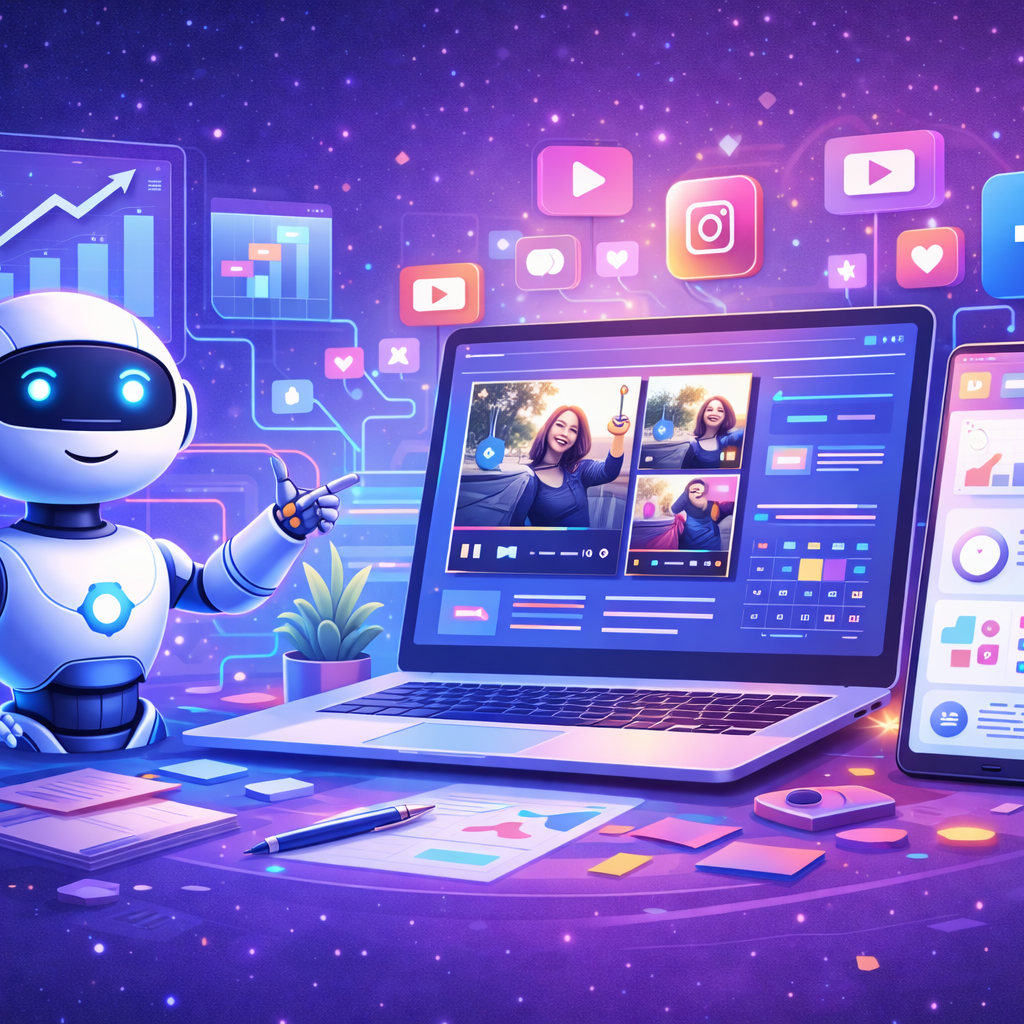
Content creation represents social media’s most time-intensive aspect. AI automation transforms this bottleneck into systematic production capability.
Tools like Midjourney and DALL-E have transformed visual content creation by enabling high-quality designs without professional design skills.
Ideation Systems
AI ideation tools generate hundreds of content topic ideas by analyzing your industry trends and conversations, successful competitor content, audience questions and pain points, seasonal opportunities and events, and search trends and popular queries.
This systematic ideation eliminates creative blocks. You never face blank pages wondering what to post. Instead, you select from dozens of data-backed topic suggestions likely to resonate with target audiences.
Implementation involves feeding AI systems with information about your business, audience, and goals. The system then generates continuously updated idea libraries organized by topic category, potential reach, production complexity, and strategic alignment.
Visual Content Generation
AI visual tools create professional graphics, images, and designs without requiring graphic design expertise. These systems generate social media graphics optimized for each platform, produce quote cards and statistic visualizations, create product showcase imagery, and design thumbnail images for video content.
Modern AI image generators like Midjourney and DALL-E produce remarkably professional results. Many businesses report visual content quality matching or exceeding what they previously paid designers to create, while producing assets in minutes rather than days.
Video Production Automation
Video dominates social media engagement but traditionally required significant production resources. AI tools now handle most production tasks: generating scripts from topic outlines, creating video from text descriptions, providing AI avatars for presenting content, automating editing including cuts, transitions, and effects, and generating multiple format variations from single source videos.
A business can now produce 20-30 professional video pieces weekly with minimal human time investment. This volume enables the testing velocity required for algorithmic optimization while maintaining production quality.
Copy Generation and Refinement
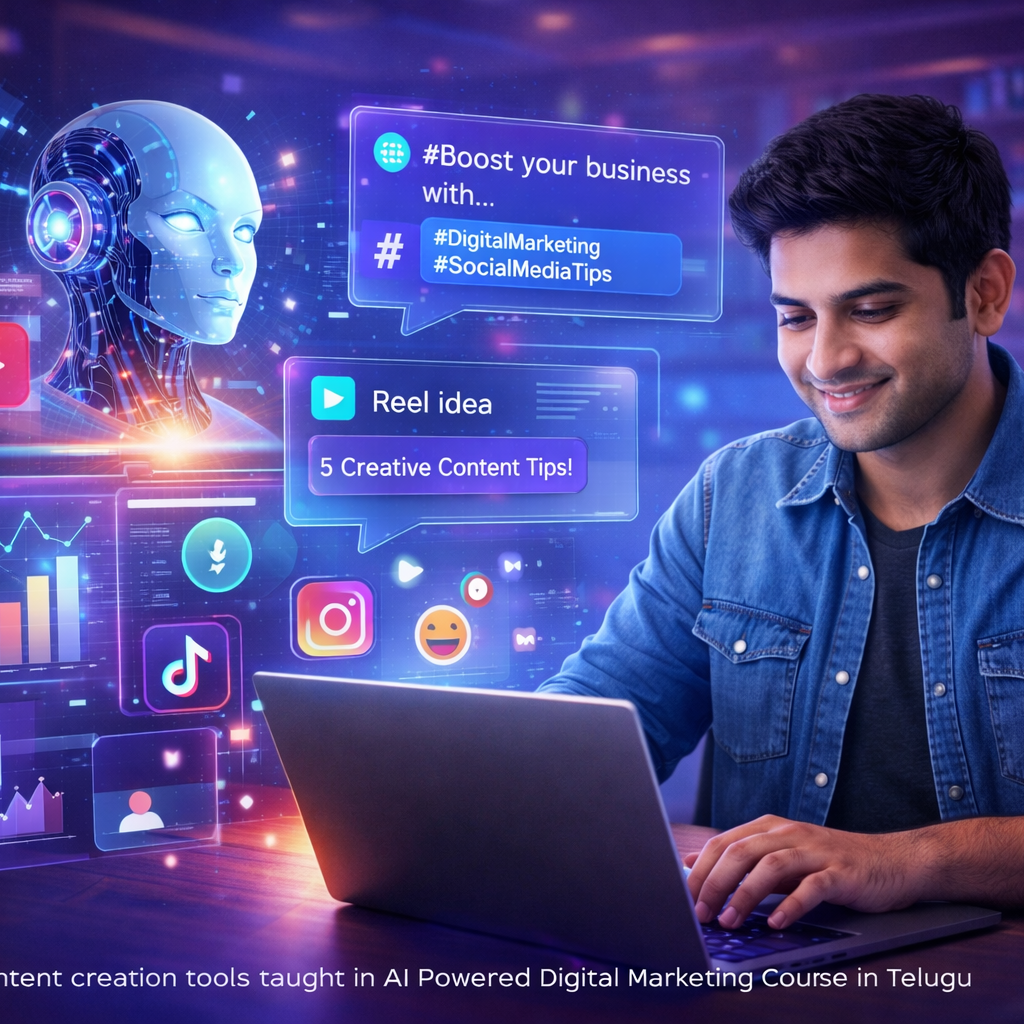
AI writing assistants generate social media copy across all content types: engaging captions that drive comments and shares, compelling hooks that stop scrolling, calls-to-action optimized for conversions, and narrative storytelling that builds connection.
These tools don’t just generate drafts—they refine based on performance data. The AI learns which messaging angles generate engagement with your specific audience, continuously improving copy effectiveness. Many marketers completing an AI Agent course in Telugu or similar programs report doubling engagement rates by implementing AI-optimized copywriting.
Content Adaptation and Repurposing
AI systems automatically adapt content across formats and platforms. They transform blog articles into social media thread series, convert podcast episodes into video clips and quote graphics, generate short-form videos from long-form content, and create platform-specific variations from single content pieces.
This repurposing multiplication allows single core content pieces to generate 20-30 social media assets. Content ROI increases dramatically when one creative effort produces weeks of social media presence.
AI Automation for Caption and Hashtag Generation
Captions and hashtags significantly impact content performance but require strategic consideration many busy marketers skip. AI automation optimizes both elements systematically.
Intelligent Caption Writing
AI caption generators analyze high-performing content in your niche, learning patterns that drive engagement. They create captions that incorporate storytelling elements that build emotional connection, questions that prompt comment responses, calls-to-action driving desired behaviors, and personality that reinforces brand voice.
Advanced systems generate multiple caption variations for A/B testing, identifying which approaches resonate best with your audience. This continuous testing improves caption effectiveness far beyond manual approaches.
Strategic Hashtag Selection
Hashtag strategy requires balancing reach and competition—popular hashtags offer large audiences but intense competition, while niche hashtags provide better visibility to smaller audiences. AI systems optimize this balance by analyzing hashtag performance in your niche, identifying hashtags with favorable competition-to-reach ratios, avoiding banned or spam-flagged hashtags, and rotating hashtags to avoid platform penalties for repetition.
The automation ensures every post includes optimized hashtag sets without manual research. Many businesses find AI hashtag selection increases discovery-based reach by 200-300%.
Engagement Hooks
AI systems specialize in creating hooks—opening lines that stop users from scrolling. By analyzing millions of high-performing posts, these systems identify hook patterns that work: curiosity gaps that create information desire, bold statements that trigger reaction, questions that prompt self-reflection, and storytelling openings that pull readers into narratives.
Implementing strong hooks transforms content performance. The same content with different opening lines can show 10x engagement variance. AI testing identifies winning hooks faster than manual approaches.
Brand Voice Consistency
Maintaining consistent brand voice across hundreds of posts challenges manual management. AI systems trained on your brand guidelines ensure every caption reflects defined personality, tone, and messaging priorities. This consistency builds recognizable brand identity that audiences connect with over time.
The AI essentially serves as a brand voice enforcer, maintaining standards that might otherwise erode under production pressure.
AI Automation for Reel Ideas and Scripts
Short-form video content—Reels and TikTok videos—drives the highest engagement but requires continuous ideation and scripting. AI automation makes this sustainable.
Trend-Based Idea Generation
AI monitors trending audio, formats, and themes across platforms, generating content ideas that adapt trends to your business context. The system identifies trends while they’re emerging rather than saturated, suggests how to participate authentically, and generates multiple concept variations for testing.
This trend participation dramatically increases content reach. Trend-aligned videos receive preferential algorithmic distribution, often achieving 10-50x normal reach. Businesses implementing AI trend monitoring report consistent viral videos that were impossible to achieve consistently with manual approaches.
Educational Content Frameworks
Educational content performs exceptionally well but requires systematic approach to avoid repetition. AI systems generate educational content series using proven frameworks: how-to tutorials, common mistake warnings, tips and tricks lists, before-after demonstrations, and myth-busting content.
The AI ensures comprehensive topic coverage without repetitive content, maintaining audience interest through variety while establishing expertise.
Entertainment-Value Content
Pure educational content fatigues audiences. Successful strategies balance education with entertainment. AI systems generate entertainment concepts that align with brand personality: humorous takes on industry situations, relatable scenarios your audience experiences, day-in-the-life content, and behind-the-scenes glimpses.
This entertainment content builds likability and connection, making audiences more receptive when you present offers or educational content.
Script Structure Optimization
AI analyzes high-performing video scripts to identify structural patterns that maintain attention: optimal hook lengths and types, effective information pacing, strategic call-to-action placement, and retention-optimizing closing techniques.
Generated scripts follow these data-backed structures, producing videos that maintain viewer attention through completion—a critical metric for algorithmic distribution.
AI Automation for DM and WhatsApp Follow-Ups
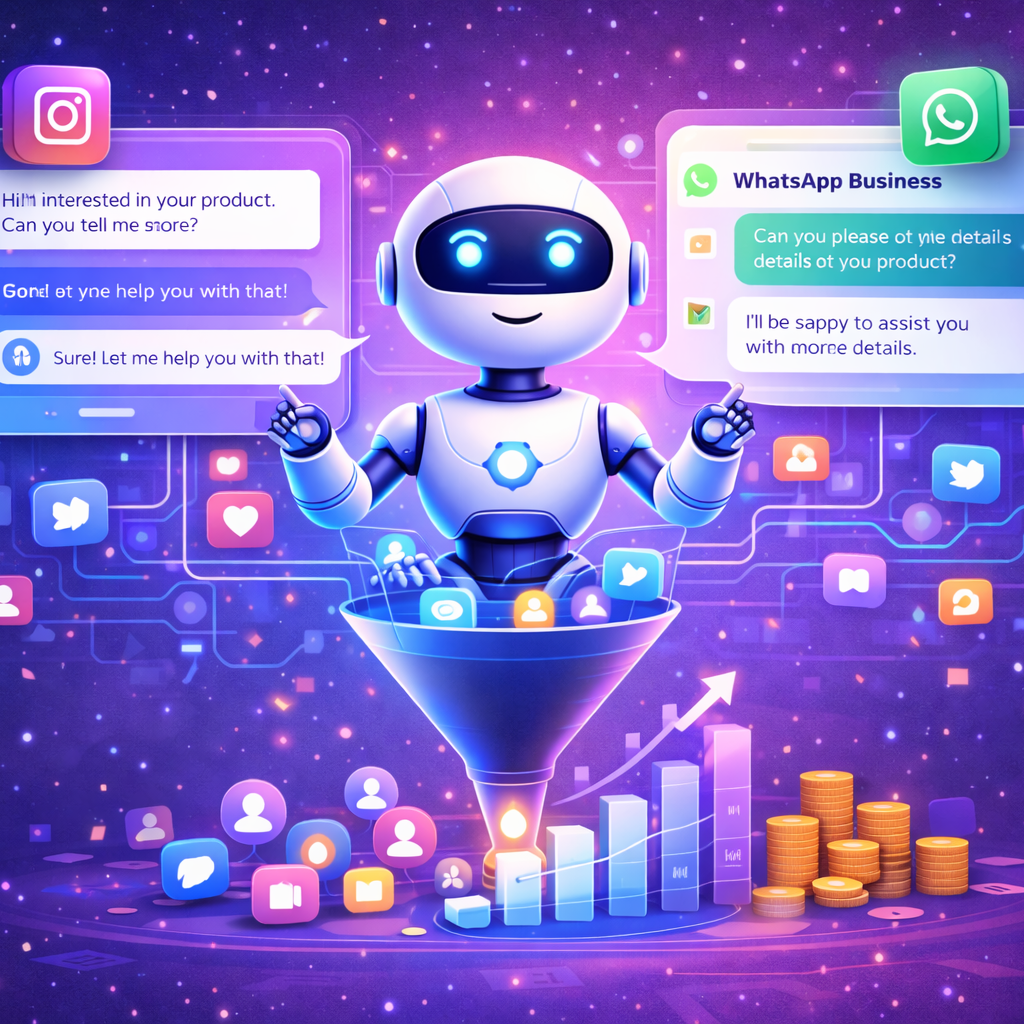
Converting social media engagement into business outcomes requires systematic follow-up. AI automation makes this scalable and effective.
Many businesses now implement these systems after learning them in an AI Agent Automation Course in Telugu, especially for WhatsApp Business–based lead follow-ups.
Engagement-Triggered Sequences
AI systems detect engagement signals indicating purchase interest—specific post saves, comment patterns, profile visits—and automatically initiate personalized conversation sequences. These automated sequences acknowledge the specific content they engaged with, provide relevant additional information, answer common questions proactively, and guide toward natural next steps.
The personalization creates genuine connection despite automation. Users experience relevant, helpful conversations rather than generic mass messaging.
Qualification and Segmentation
As conversations progress, AI systems qualify leads by identifying needs, budget capacity, timeline urgency, and decision-making authority. This qualification happens naturally through conversation rather than interrogative forms, maintaining relationship quality while gathering strategic information.
Qualified leads receive appropriate follow-up sequences while unqualified contacts receive nurture content, optimizing human team time toward highest-probability opportunities.
WhatsApp Business Integration
WhatsApp has become critical for business communication in many markets. AI chatbots integrate with WhatsApp Business to handle common inquiries, share product information, book appointments or consultations, process orders, and maintain engagement through valuable content sharing.
This automation transforms WhatsApp from time-consuming communication channel into scalable lead nurturing and customer service system. Professionals learning through an AI Agent Automation Course in Telugu often implement these systems first, as WhatsApp dominates communication in many regional markets.
Conversation Analytics
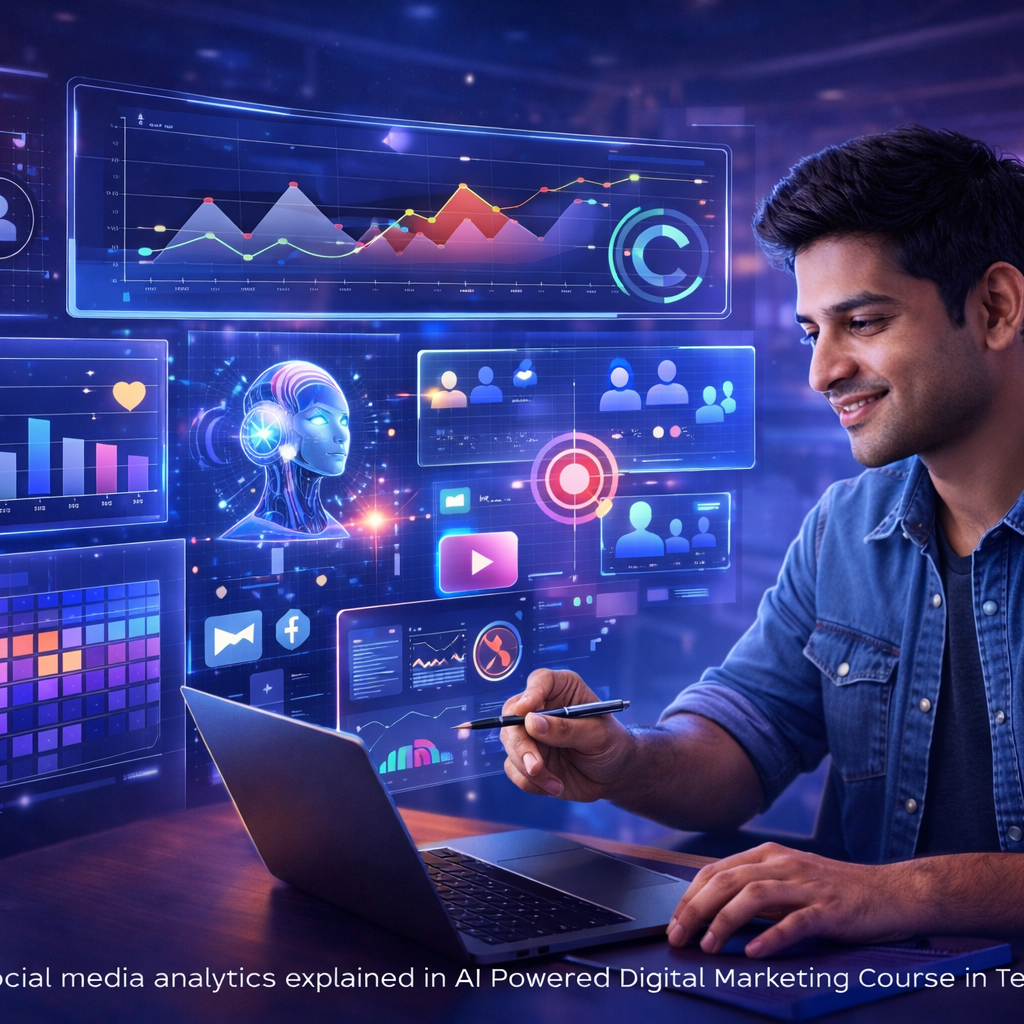
AI systems analyze conversation patterns to identify common questions for content creation, objections requiring strategic addressing, topics generating high interest, and messaging that moves conversations toward conversion.
These insights inform both automated response improvements and broader marketing strategy, creating feedback loops that continuously improve effectiveness.
Complete Campaign Workflow Using AI Agent Automation
Understanding how these elements integrate into cohesive workflows clarifies practical implementation.
This end-to-end workflow is commonly taught as part of an AI Combo Course in Telugu, combining digital marketing and AI agent automation skills.
Phase 1: Strategic Foundation
Successful AI automation begins with strategic clarity. Define your target audience with demographic and psychographic detail, clarify business goals and success metrics, establish brand voice and messaging guidelines, and identify content themes aligned with audience interests and business objectives.
This foundation provides direction for AI systems. While AI handles execution, humans provide strategic intent. Most professionals completing an AI Powered Digital Marketing Course in Telugu report this strategic clarity step as crucial for campaign success.
Phase 2: System Configuration
With strategy defined, configure AI tools and workflows. Set up content generation systems with brand parameters, implement scheduling automation across platforms, configure engagement monitoring and response systems, and establish analytics tracking for performance measurement.
Initial configuration requires several hours but creates infrastructure that operates automatically thereafter. The time investment produces ongoing returns without recurring effort.
Phase 3: Content Production Launch
Begin systematic content production using AI tools. Generate content idea libraries for next 30-90 days, produce content assets using AI creation tools, optimize captions, hashtags, and hooks, and load content into scheduling systems.
Many businesses batch-produce content monthly, creating four weeks of social presence in a single focused production day. This batching proves more efficient than daily content creation while ensuring consistent publishing.
Phase 4: Automated Distribution
AI systems handle distribution automatically. They publish content at algorithm-optimal times, monitor performance in real-time, adjust strategy based on performance data, and engage with audience responses automatically.
During this phase, the human role shifts from execution to monitoring. Review performance dashboards periodically, approve agent suggestions for strategic adjustments, and provide high-level guidance while systems handle tactical execution.
Phase 5: Conversation Management
As content drives traffic and engagement, AI conversation systems activate. They respond to comments and questions automatically, initiate direct message conversations with highly engaged users, qualify and segment leads based on conversation patterns, and escalate high-value opportunities to human team members.
This automation scales conversation capacity beyond manual possibility. Businesses report managing 10x engagement volume with AI assistance compared to manual approaches.
Phase 6: Continuous Optimization
AI agents analyze performance continuously, implementing incremental improvements. They identify and expand successful content types, retire underperforming approaches, test new content variations and formats, and refine audience targeting and personalization.
This optimization happens automatically, creating compound improvement over time. Campaign effectiveness month six typically far exceeds month one performance as learning accumulates.
Phase 7: Strategic Evolution
Quarterly or monthly, conduct strategic reviews examining overall performance trends, competitive landscape changes, emerging platform opportunities, and potential strategic adjustments. Use these insights to update AI system parameters and strategic direction.
These periodic human interventions steer automated systems toward evolving goals while letting AI handle continuous tactical optimization.
Organic Reach vs Paid Ads: Before and After AI
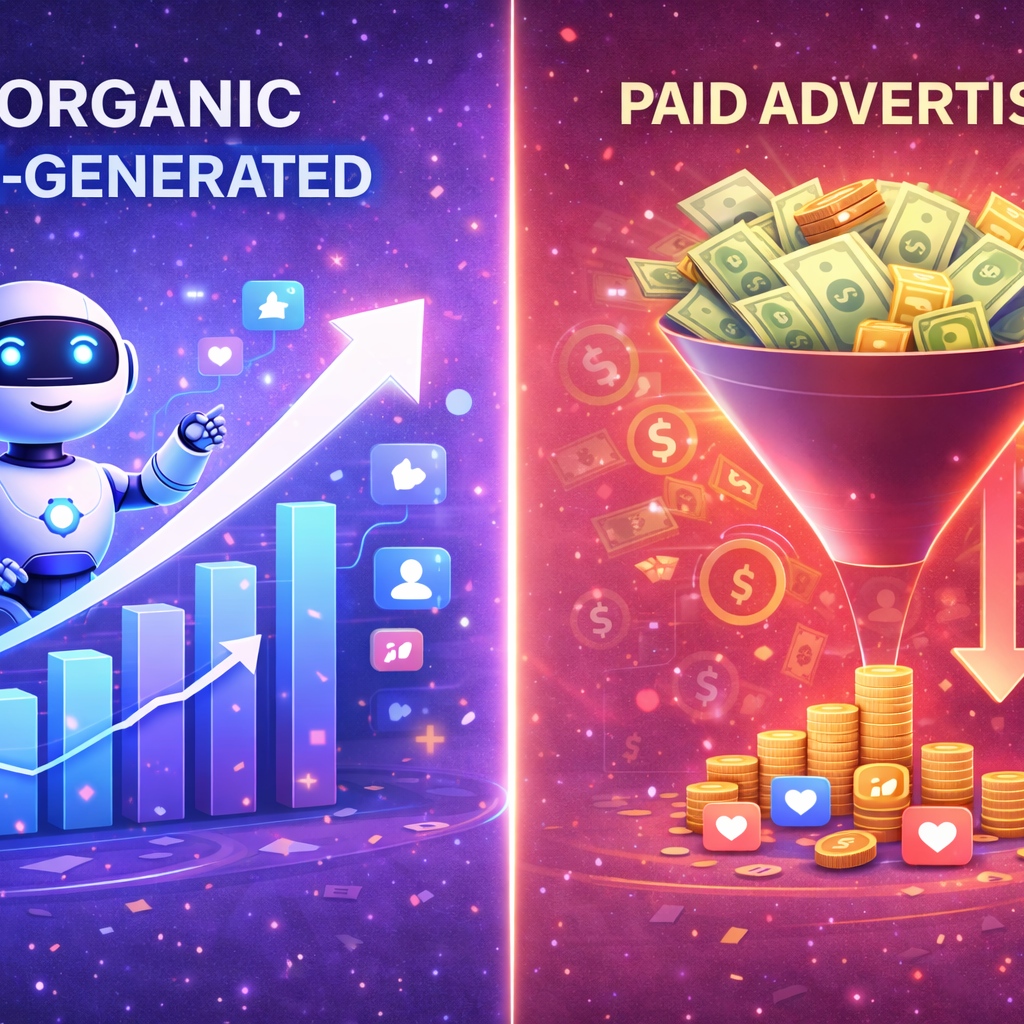
Comparing traditional paid advertising with AI-powered organic strategies reveals dramatic differences in both cost efficiency and sustainable results.
Traditional Paid Advertising Baseline
Typical small business paid social campaigns show these characteristics: cost per lead ranging from $10-50 depending on industry, monthly ad spend of $2,000-5,000 for meaningful results, lead quality varying with ad fatigue over time, immediate results that stop when budget ends, and increasing costs as competition intensifies.
These campaigns generate predictable lead flow but require continuous investment. Stopping ad spend immediately halts new leads, creating budget dependency that strains cash flow and limits growth.
Manual Organic Approach Performance
Businesses attempting manual organic social media typically achieve these results: posting 3-5 times weekly when time permits, organic reach of 2-5% of followers, monthly leads numbering 10-30 from social media, and time investment of 15-20 hours weekly for minimal results.
The effort-to-results ratio makes manual organic approaches unsustainable for most businesses. Time investment exceeds value generated, leading to abandonment or minimal effort that produces correspondingly minimal results.
AI-Powered Organic Campaign Results
Businesses implementing comprehensive AI automation report dramatically different outcomes: posting 15-30 pieces of optimized content weekly, organic reach of 50-200% of follower count through algorithmic amplification, monthly leads numbering 200-500 from social media, time investment of 3-5 hours weekly for strategic oversight, and cost per lead of $1-3 when accounting for tool subscriptions.
These results reflect real implementations across various business types. The combination of volume, optimization, and consistency triggers algorithmic amplification that manual approaches cannot achieve.
Economic Comparison
Consider a small business generating 100 qualified leads monthly. Traditional paid ads might cost $3,000-5,000 to achieve this lead volume. Manual organic approaches typically cannot reach this volume regardless of effort. AI-powered organic campaigns achieve this volume for $300-500 in tool costs plus 15-20 hours monthly management time.
The cost per lead decreases by 90% or more while lead quality often improves since organic discovery builds greater trust than interruption advertising. The ROI advantage becomes overwhelming over even short timeframes.
Sustainability Differences
Paid advertising creates temporary results—leads stop when spending stops. AI-powered organic campaigns build compounding assets: growing follower bases, accumulated content libraries, algorithm reputation that improves distribution, and community relationships that generate referrals.
These assets continue producing value long after initial creation, generating leads months or years later. One year into AI-powered organic strategy, businesses often report old content still generating weekly leads—passive income from past effort.
Case-Style Examples Across Different Business Types
Examining specific implementations clarifies how AI-powered campaigns work across diverse business contexts.
Local Service Business: Home Cleaning Company
A residential cleaning service struggled with paid ad costs consuming 35% of revenue while generating leads with poor show-up rates. They implemented AI-powered social media automation focused on educational and before-after content.
Their AI system generated content ideas around cleaning tips, common mistakes, seasonal cleaning guides, and transformation showcases. Video content production accelerated to 20 pieces weekly using AI scripting and editing tools. The company invested approximately 4 hours weekly overseeing the system compared to their previous 15 hours of manual social media management.
Within four months, their Instagram following grew from 800 to 12,000 while TikTok reached 45,000 followers. Monthly lead generation increased from 40 leads via ads to 180 leads via organic social. Cost per lead dropped from $42 to under $3. Perhaps most significantly, organic leads showed 60% higher show-up rates than paid ad leads, indicating better qualification through value-based discovery.
The cleaning service maintains minimal ad spending for retargeting but generates 85% of new customer acquisition through AI-powered organic campaigns. The owner reported that implementing skills learned through an AI Combo Course in Telugu helped her transition from manual management to automated systems despite limited technical background.
Freelance Consultant: Digital Marketing Specialist
A freelance digital marketing consultant competed against established agencies for client acquisition. Limited budget prevented competing on paid advertising while manual content creation couldn’t maintain consistency needed for organic reach.
He implemented an AI content repurposing system. Each client project became content fuel—case studies, lessons learned, tactical tips, and strategy frameworks. AI tools transformed these insights into LinkedIn articles, tweet threads, Instagram Reels, and email newsletters. The consultant invested 5 hours weekly on strategy and oversight while AI systems handled production and distribution.
His LinkedIn following grew from 2,000 to 28,000 in eight months. Monthly inbound client inquiries increased from 2-3 to 15-20, allowing selective client acceptance at premium rates. Annual revenue increased 320% while working hours decreased as better clients required less hand-holding.
The consultant attributes his transformation to systematic AI implementation, noting that automation handled the execution consistency he struggled to maintain manually. His social media presence now operates as a perpetual lead generation engine requiring minimal ongoing time investment.
E-Commerce Startup: Sustainable Fashion Brand
An eco-friendly clothing startup faced the classic challenge: needing brand awareness without budget for extensive advertising. They implemented AI-powered social media campaigns focused on sustainability education, styling tips, and behind-the-scenes content.
Their AI system generated content across TikTok, Instagram, and Pinterest, producing 40 pieces weekly across platforms. Automated engagement systems initiated conversations with users showing high interest, qualifying leads and directing them toward specific product collections matching their stated preferences.
Within six months, they built Instagram following of 67,000 and TikTok presence of 230,000 with multiple viral videos explaining sustainable fashion impacts. Monthly website traffic grew from 3,000 to 85,000 visitors with 68% coming from social platforms. Revenue grew from $12,000 to $180,000 monthly.
Their customer acquisition cost through organic social averaged $4.20 compared to $38 for paid advertising they tested. The dramatic economics enabled rapid growth without external funding, building sustainable business model on AI-automated organic marketing.
Significant Benefits for Small Businesses and Solopreneurs
AI-powered social media campaigns particularly advantage smaller operations, leveling playing fields against larger competitors.
Achieving Enterprise Results on Small Team
Solo entrepreneurs and small teams now achieve content production volumes previously requiring entire departments. AI handles the execution heavy lifting while humans provide strategic direction and creative oversight. This leverage transforms competitive dynamics.
A solopreneur with strong AI tool proficiency can outperform five-person marketing teams using traditional manual approaches. The automation advantage compounds over time as AI systems learn and improve while manual approaches plateau or decline.
Minimal Technical Requirements
Modern AI tools feature intuitive interfaces requiring minimal technical expertise. If you can use social media and basic software, you can implement AI marketing automation. The barriers that once required technical specialists or agencies have largely dissolved.
Many small business owners completing an AI Powered Digital Marketing Course in Telugu report successfully implementing sophisticated systems despite considering themselves “not technical.” The democratization of AI tools enables capabilities previously inaccessible to non-technical marketers.
Flexible Time Investment
AI automation accommodates variable time availability. During busy periods, systems continue operating with minimal oversight. When time permits, you can invest in strategic refinements. This flexibility proves crucial for entrepreneurs managing multiple responsibilities.
The systems don’t require consistent daily involvement. Batch-configuration work in available time blocks produces continuous automated operation. This flexibility makes sustainable social media presence achievable for time-constrained business owners.
Scalable Growth Without Proportional Cost
Traditional marketing requires proportional investment increases to achieve growth. Doubling lead generation typically requires doubling budget or team size. AI-powered systems scale more efficiently—doubled output might require only 20-30% increased tool costs and minimal additional time investment.
This favorable scaling economics enables sustainable growth trajectories. Small businesses can expand marketing reach without the cost increases that typically constrain growth.
Competitive Intelligence Access
AI tools provide analytics and insights previously available only through expensive enterprise platforms. Small businesses now access sophisticated audience intelligence, competitor performance analysis, content optimization insights, and predictive trend identification.
This intelligence parity allows strategic decisions informed by data comparable to larger competitors, removing historical information advantages that favored established players.
Common Mistakes in AI Social Media Campaigns
Understanding frequent implementation errors helps avoid setbacks that undermine campaign effectiveness.
Over-Automation Without Human Oversight
AI automation should enhance human creativity and strategy, not replace it entirely. Businesses that configure systems then ignore them experience declining performance as AI operates without strategic guidance. Content becomes repetitive, strategic opportunities are missed, and changing market conditions go unaddressed.
Successful implementations maintain human oversight providing strategic direction, creative inputs, and periodic performance reviews. AI handles execution; humans provide intelligence and judgment.
Generic Content Despite Personalization Capability
Many businesses fail to leverage AI’s personalization capabilities, sending identical messages to entire audiences. This wastes AI’s ability to segment audiences and customize messaging based on individual interests and behaviors.
Effective implementations use AI to identify audience segments with different needs and preferences, create content variations addressing specific interests, and distribute personalized versions to appropriate segments. This personalization dramatically improves engagement compared to generic broadcasting.
Neglecting Platform-Specific Optimization
Each platform has unique culture, content preferences, and algorithm priorities. Simply cross-posting identical content across platforms produces mediocre results. Successful AI implementations adapt content for each platform’s specific requirements while maintaining message consistency.
The AI can handle platform-specific optimization automatically if properly configured. Failing to implement this capability leaves significant performance improvements unrealized.
Focusing on Vanity Metrics
Follower counts and post likes represent vanity metrics that may not correlate with business results. Businesses optimizing for these metrics often achieve impressive numbers with poor business outcomes—large audiences that don’t convert to customers.
Successful implementations focus on business outcome metrics: qualified leads generated, conversion rates to customers, customer acquisition cost, and customer lifetime value. Optimize AI systems for these business metrics rather than vanity metrics.
Insufficient Initial Training Data
AI systems improve through learning, but require minimum data volumes for effective optimization. Businesses implementing AI then expecting immediate viral success often disappoint themselves with early results before systems accumulate sufficient performance data.
Realistic expectations recognize that AI campaigns improve over weeks and months as learning accumulates. Early results may not dramatically exceed manual approaches, but compound improvements create substantial performance advantages over time.
Ignoring Engagement Quality
AI can generate high comment volumes, but comment quality matters more than quantity. Campaigns that generate “nice post” responses show high engagement metrics but minimal business value. Meaningful comments indicating genuine interest and connection predict conversion far better than volume metrics.
Configure AI systems to promote content generating substantial comments, saves, and shares rather than optimizing purely for volume metrics. These quality signals indicate valuable audience relationships.
Neglecting Community Building
Social media marketing shouldn’t focus solely on broadcasting content. Building genuine community creates more sustainable value. Businesses using AI purely for content distribution without fostering community miss opportunities for relationship development that drives long-term success.
Use AI automation to facilitate community interaction—responding to questions, fostering discussions, recognizing valuable contributors—rather than just publishing content. This community focus creates loyal audiences that drive sustainable business growth.
Future of Social Media Marketing With AI Agents
Current AI capabilities represent early stages of an ongoing revolution. Understanding emerging trends helps prepare for accelerating change.
Hyper-Personalization at Scale
Emerging AI systems will personalize content at individual user level, creating unique experiences for each audience member. Rather than segmented messaging to audience groups, AI will generate individualized content variations tailored to specific users based on their complete interaction history and preferences.
This hyper-personalization will dramatically increase engagement and conversion rates as each user experiences perfectly relevant content. The technology enabling this already exists; implementation will expand rapidly as more marketers adopt these capabilities.
Predictive Content Performance
AI systems will predict content performance before publication with increasing accuracy. Machine learning models will analyze content elements—visual composition, messaging angles, timing—and forecast engagement probability, enabling strategic decisions about which content to publish and promote.
This predictive capability will dramatically improve content ROI by eliminating underperforming content before publication while identifying high-potential pieces for additional promotion.
Autonomous Campaign Management
AI agents will evolve toward full autonomous campaign management, making strategic decisions currently requiring human input. These systems will set campaign objectives, allocate resources across platforms and content types, adjust strategies based on performance, and report results to humans for approval.
This autonomy will further compress the time required for oversight while improving campaign effectiveness through AI’s superior data processing and optimization capabilities.
Cross-Platform Intelligence Integration
Future AI systems will synthesize intelligence across all marketing channels—social media, email, website, advertising—creating unified understanding of customer journeys and preferences. This integration will enable coordination impossible with channel-specific management.
The AI might recognize that users discovering you on Instagram convert best after receiving specific email sequences, automatically coordinating social and email campaigns for maximum conversion efficiency.
Conversational Commerce
AI chatbots will handle increasingly complex customer interactions including product recommendations, purchase transactions, customer service, and relationship management. The line between marketing, sales, and service will blur as AI manages complete customer journeys.
Social media will transform from awareness and consideration channel into complete commerce platform with AI agents managing end-to-end customer experiences.
Ethical AI and Transparency
As AI becomes more sophisticated, ethical considerations and transparency will increase in importance. Regulations may require disclosure of AI-generated content and automated interactions. Consumer preferences may favor brands using AI ethically rather than deceptively.
Forward-thinking businesses will develop transparent AI practices, clearly communicating when users interact with AI while ensuring these interactions provide genuine value rather than manipulation.
Frequently Asked Questions
1.How much does implementing AI social media automation cost?
Basic AI social media automation can begin with $50-200 monthly tool subscriptions. Comprehensive implementations might require $300-500 monthly across multiple specialized tools. This represents 85-95% cost reduction compared to hiring social media managers or agencies, while often producing superior results through systematic optimization.
2.Do I need coding knowledge to implement AI marketing automation?
No coding knowledge is required. Modern AI marketing tools feature visual interfaces and pre-built templates designed for non-technical users. If you can use social media and basic software applications, you can implement these systems. Many successful implementations come from business owners with zero technical background who completed structured training through programs like an AI Agent Automation Course in Telugu.
3.How long before AI campaigns generate results?
Initial results often appear within 2-4 weeks as content publishing begins. However, optimal performance typically develops over 2-3 months as AI systems accumulate performance data and optimize approaches. Unlike paid advertising providing immediate results, AI organic campaigns build compound momentum delivering increasing returns over time.
4.Can AI create content that sounds human and authentic?
Yes, modern AI generates remarkably natural, authentic content when properly configured. The key is training AI systems on your brand voice, providing strategic direction rather than generic prompts, and reviewing outputs initially to refine quality. Many businesses find AI-generated content performs better than manually created content because it incorporates data-driven optimization insights.
5.Will social platforms penalize AI-generated content?
Current platform policies don’t prohibit AI-generated content provided it offers genuine value to audiences and doesn’t violate content policies. Platforms care about engagement quality, not creation methodology. AI content performing well receives algorithmic amplification just like manually created content. Focus on creating valuable content regardless of creation method.
6.How much time does managing AI campaigns require?
After initial setup requiring 10-20 hours, ongoing management typically requires 3-5 hours weekly for strategic oversight, performance review, and system refinement. This represents 70-85% time reduction compared to manual social media management while generating superior results. The time investment decreases further as automation matures.
7.Can AI handle customer service and sales conversations?
Yes, AI chatbots effectively handle most routine customer inquiries, qualification conversations, and even basic sales processes. Advanced implementations resolve 60-80% of inquiries without human intervention while escalating complex situations to human team members. This scales customer interaction capacity far beyond manual management possibility.
8.Do I need different AI tools for different platforms?
Some AI tools specialize in specific platforms while others handle multiple platforms. Most comprehensive implementations use 3-5 specialized tools for different functions: content creation, scheduling and distribution, engagement management, and analytics. These tools typically integrate together, creating cohesive automated workflows across platforms.
9.How do AI campaigns perform compared to paid advertising?
AI-powered organic campaigns typically generate 5-10x better cost per lead than paid advertising while producing higher quality leads who convert at better rates. However, results develop over time rather than immediately. Optimal strategies often combine AI organic campaigns for sustainable lead flow with modest paid advertising for immediate results and retargeting.
10.What if my business is in a boring industry?
Every industry has audiences seeking education, solutions, and connection—the fundamentals of engaging content. AI systems excel at finding interesting angles in seemingly mundane topics by analyzing what content performs well in your niche, identifying audience questions and concerns, and creating educational and entertaining content addressing these interests. Many “boring” businesses achieve exceptional social media results with strategic AI implementation.
11.Can this work for B2B businesses or just B2C?
AI social media campaigns work excellently for B2B businesses, often producing better results than B2C. B2B audiences actively seek educational content, industry insights, and thought leadership—exactly what AI content systems create efficiently. LinkedIn proves particularly effective for B2B AI campaigns, with many businesses generating consistent qualified leads through automated thought leadership content.
12.What happens if AI makes mistakes in customer interactions?
Quality AI implementations include safeguards: human review of AI-generated content before publication, escalation protocols for complex customer inquiries, regular monitoring of AI conversation quality, and clear feedback mechanisms for continuous improvement. Initial implementations benefit from closer oversight, gradually allowing more autonomy as confidence in system quality develops. Most businesses find AI makes fewer errors than overworked human teams responding under time pressure.
Building Sustainable Growth Using AI: A Strategic Conclusion
Social media marketing stands at a transformative inflection point. The old model—manual content creation, expensive paid advertising, and labor-intensive engagement management—cannot compete against AI-powered systematic approaches that achieve superior results with fraction of the time and cost investment.
This transformation isn’t about technology replacing human creativity or strategy. Instead, AI handles execution and optimization, freeing humans to focus on strategic thinking, creative direction, and relationship building that machines cannot replicate. The partnership between human intelligence and artificial intelligence creates capabilities neither achieves independently.
For small businesses and solopreneurs, this revolution represents unprecedented opportunity. The historical advantages of large marketing budgets and dedicated teams have diminished dramatically. A one-person operation with strong AI implementation can now outperform traditional twenty-person marketing departments. This democratization of marketing capability will reshape competitive landscapes across industries.
However, this opportunity window won’t remain open indefinitely. Early adopters gain significant first-mover advantages: building audiences before platform saturation increases, establishing thought leadership positions, refining systems through early learning, and developing AI literacy that compounds over time. Those waiting for perfect certainty or hoping AI is temporary hype will find themselves competing against established AI-powered competitors with insurmountable advantages.
The path forward requires action, not perfect knowledge. Start with manageable implementations: choose one platform for focus, implement one automation workflow, create content systematically for 90 days, and measure results. The learning from imperfect action exceeds endless planning and preparation. Many successful implementations began with small experiments that revealed possibilities worth expanding.
Investment in learning accelerates progress beyond trial-and-error discovery. Structured education through programs teaching AI marketing implementation—whether an AI Powered Digital Marketing Course in Telugu with AI Agent Automation or English-language equivalents—compresses learning timelines dramatically. The investment of several hundred dollars in education typically returns multiples through avoided mistakes and accelerated implementation.
Success patterns across diverse businesses reveal consistent principles. Maintain strategic human oversight while delegating execution to AI systems. Focus on audience value rather than self-promotion. Build community relationships, not just broadcast audiences. Optimize for business outcomes rather than vanity metrics. Maintain consistent execution that algorithms reward. These principles, implemented systematically through AI automation, produce remarkable results across business types and markets.
The future of social media marketing will be increasingly AI-powered. Businesses adopting these approaches now position themselves advantageously for accelerating change. Those clinging to manual approaches will find themselves progressively unable to compete as AI capabilities expand and adoption increases.
Your next step is clarity about strategic priority. Do you need greater brand awareness, more qualified leads, improved conversion rates, or enhanced customer relationships? Define your primary objective, then implement AI systems specifically designed to achieve that outcome. This focused approach proves more effective than attempting comprehensive transformation simultaneously.
The tools exist, the methodologies are proven, and the economic advantages are compelling. The primary barrier to implementation is no longer technology or cost—it’s decision and action. The businesses thriving five years from now will be those that embraced AI marketing automation today, building compound advantages through continuous learning and refinement.
Social media marketing’s transformation from art to science, from labor-intensive to automated, from expensive to accessible, creates once-in-generation opportunity. The question isn’t whether AI will dominate marketing—that’s inevitable. The question is whether you’ll be among those capturing the advantages of early adoption or among those scrambling to catch up after opportunities have passed.
Begin today. Choose one platform, one AI tool, one automation workflow. Implement imperfectly, learn continuously, and refine systematically. The compound returns from this systematic approach will transform your business in ways currently difficult to imagine. The future of marketing has arrived—those acting decisively will shape it rather than merely responding to it.