

The Future of AI in Advertising: How AI Powered Digital Marketing Is Transforming Brands
The advertising industry is undergoing a major transformation as artificial intelligence (AI) reshapes how brands connect with consumers. From predictive analytics to AI-generated creative content, AI powered digital marketing is no longer an emerging trend—it is redefining the future of advertising and brand communication.
Today, businesses that adopt AI driven marketing strategies gain a significant advantage by delivering more personalized, data-driven, and efficient advertising campaigns.
The Evolution of Advertising Through Artificial Intelligence
Over the past decade, advertising has evolved from static billboards and television commercials into dynamic, personalized digital experiences. This shift has been accelerated by machine learning and AI technologies capable of processing massive datasets, identifying behavioral patterns, and making real-time decisions at scale.
Traditional advertising relied on broad demographic targeting such as age, gender, and income groups. While effective to an extent, this approach failed to capture the deeper behavioral and emotional drivers behind consumer decisions.
With the rise of AI in advertising, marketers can now analyze user behavior at an individual level—tracking browsing habits, purchase history, engagement patterns, and content preferences. This enables hyper-personalized advertising experiences that deliver the right message at the right time.
Hyper-Personalization Powered by AI in Digital Marketing
One of the biggest advantages of AI powered digital marketing is its ability to deliver hyper-personalization. AI systems analyze thousands of real-time data points to understand customer intent and behavior more accurately than traditional marketing tools.
Instead of generic messaging, brands can now create personalized campaigns tailored to individual preferences. This level of personalization improves engagement, increases conversion rates, and builds stronger brand relationships.
Predictive Analytics: Anticipating Customer Behavior
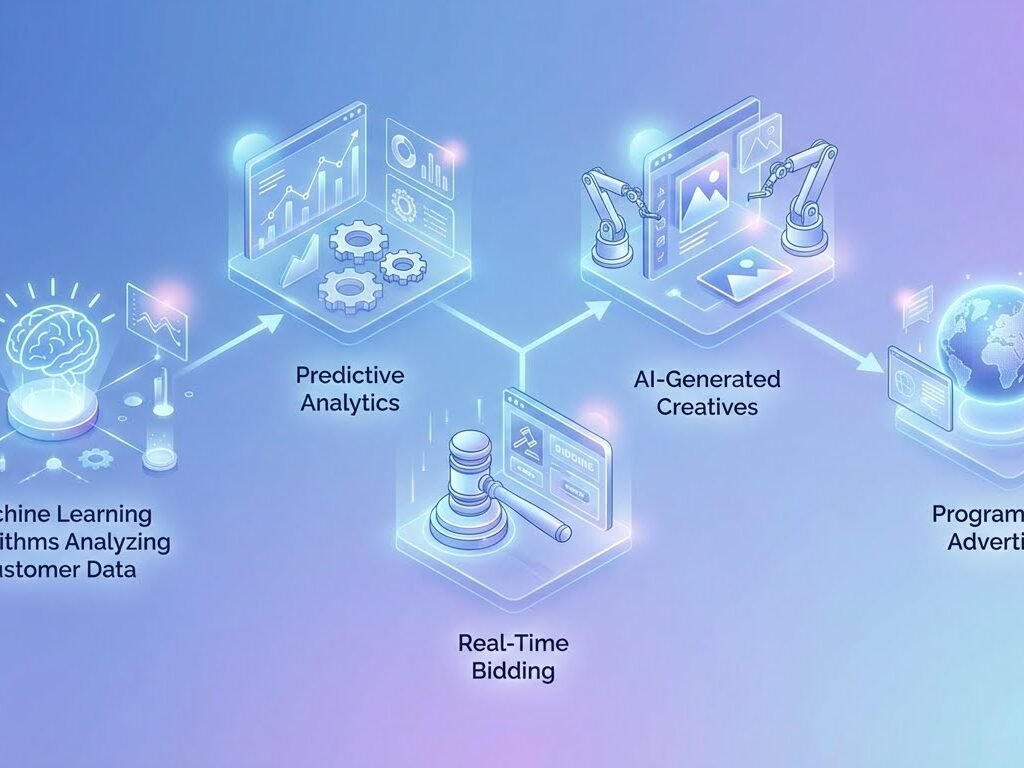
Predictive analytics in marketing is one of the most powerful applications of artificial intelligence. By analyzing historical data and user behavior patterns, AI can forecast future actions with high accuracy.
For example, AI can predict when a customer is most likely to make a purchase, which products they may be interested in next, and what type of messaging will resonate best. This allows brands to proactively design campaigns rather than reactively adjust them.
Predictive analytics also helps optimize advertising budgets by identifying high-performing channels and eliminating wasted spend, resulting in better ROI from AI advertising campaigns.
Creative AI: Automated Content Generation at Scale
The rise of AI generated ad creatives has transformed the way advertising content is produced. Generative AI tools can now create marketing copy, visuals, videos, and campaign ideas within minutes.
Rather than replacing human creativity, AI acts as a creative partner. It enables marketers to generate multiple variations quickly, test performance, and refine the best-performing creatives. This combination of human insight and AI efficiency dramatically improves creative output.
Additionally, AI allows for dynamic content optimization, where ads automatically adapt based on user behavior, platform, and context—ensuring maximum relevance and engagement.
For those interested in automating marketing workflows, lead generation, and customer engagement, learning through an AI Agent Automation Course can help build practical automation skills.
Programmatic Advertising and AI-Driven Optimization
Programmatic advertising powered by AI has revolutionized digital ad buying. AI systems conduct real-time bidding for ad placements in milliseconds, ensuring ads are shown to the most relevant users at the optimal moment.
These systems continuously learn from campaign performance, automatically adjusting bids, creatives, and targeting strategies. This results in higher efficiency, improved targeting accuracy, and better campaign performance.
Advanced AI systems also analyze contextual factors such as content relevance, timing, and user intent to ensure ads are not only targeted but also contextually appropriate.
Voice Search and Conversational AI in Advertising
The growth of voice-enabled devices and chatbots has introduced conversational AI as a key component of modern advertising. Brands are now engaging users through voice assistants and AI chatbots that provide instant responses, personalized recommendations, and seamless customer support.
Voice search optimization has become critical, as spoken queries differ significantly from typed searches. AI helps marketers analyze voice search behavior and optimize content to remain visible in this evolving search landscape.
Conversational AI also enhances customer experience by offering real-time assistance, guiding users through purchase decisions, and improving overall brand interaction.
Privacy, Ethics, and Responsible AI Advertising
As AI becomes more deeply integrated into advertising, concerns around data privacy and ethical AI use continue to grow. Consumers demand transparency and control over how their data is collected and used.
Modern AI powered advertising strategies emphasize privacy-first approaches, including contextual targeting and responsible data handling practices. Brands that prioritize ethical AI usage and transparency will earn greater trust and long-term customer loyalty.
The Human Element in AI Powered Marketing
Despite its advanced capabilities, AI cannot replace human creativity, emotional intelligence, or strategic thinking. AI excels at data processing and automation, while humans bring storytelling, cultural understanding, and empathy.
The most successful marketing strategies combine AI efficiency with human creativity. AI handles optimization and analytics, allowing marketers to focus on building authentic connections and meaningful brand narratives.
What’s Next: The Future of AI in Advertising
The future of AI in advertising includes immersive experiences through virtual reality (VR) and augmented reality (AR), real-time sentiment analysis, and emotion-aware marketing strategies.
As AI continues to evolve, it will move beyond optimization to innovation—helping brands discover creative possibilities that were previously unimaginable.
Conclusion: AI Is Shaping the Future of Advertising
AI is no longer a futuristic concept—it is already transforming advertising and digital marketing. Brands that embrace AI powered digital marketing, predictive analytics, and automation gain a competitive edge in efficiency, personalization, and performance.
The future belongs to marketers who adopt AI strategically while maintaining a strong human connection. By combining technology with creativity and ethics, businesses can build powerful, future-ready advertising strategies that drive lasting success.